
Missing one tooth can affect your smile. Missing several teeth can make everyday activities like eating, speaking, and smiling comfortably much more difficult. If you’re considering dental implants in Mohali, one of the first questions you’ll likely ask is: Do I need a single dental implant or multiple dental implants?
The answer depends on several factors, including the number of missing teeth, the condition of your jawbone, your overall oral health, and your long-term treatment goals.
This guide explains the differences between single and multiple dental implants, their benefits, and how dentists determine the most suitable option for each patient.
Why Replacing Missing Teeth Matters
A missing tooth is more than just a cosmetic concern. When a tooth is lost, the surrounding teeth can gradually shift into the empty space. Over time, this may affect your bite, make cleaning more difficult, and increase the risk of gum disease and tooth decay.
Another important concern is jawbone loss. Tooth roots stimulate the jawbone whenever you chew. Once a tooth is missing, that stimulation stops, and the bone in that area begins to shrink—a process known as bone resorption. According to the American Academy of Implant Dentistry (AAID), dental implants are currently the only tooth replacement option that replaces both the visible tooth and its root, helping preserve jawbone health.
Whether you’re missing one tooth or several, replacing them promptly can help maintain your oral health and prevent future complications.
What Is a Single Dental Implant?
A single dental implant is used when only one tooth is missing.
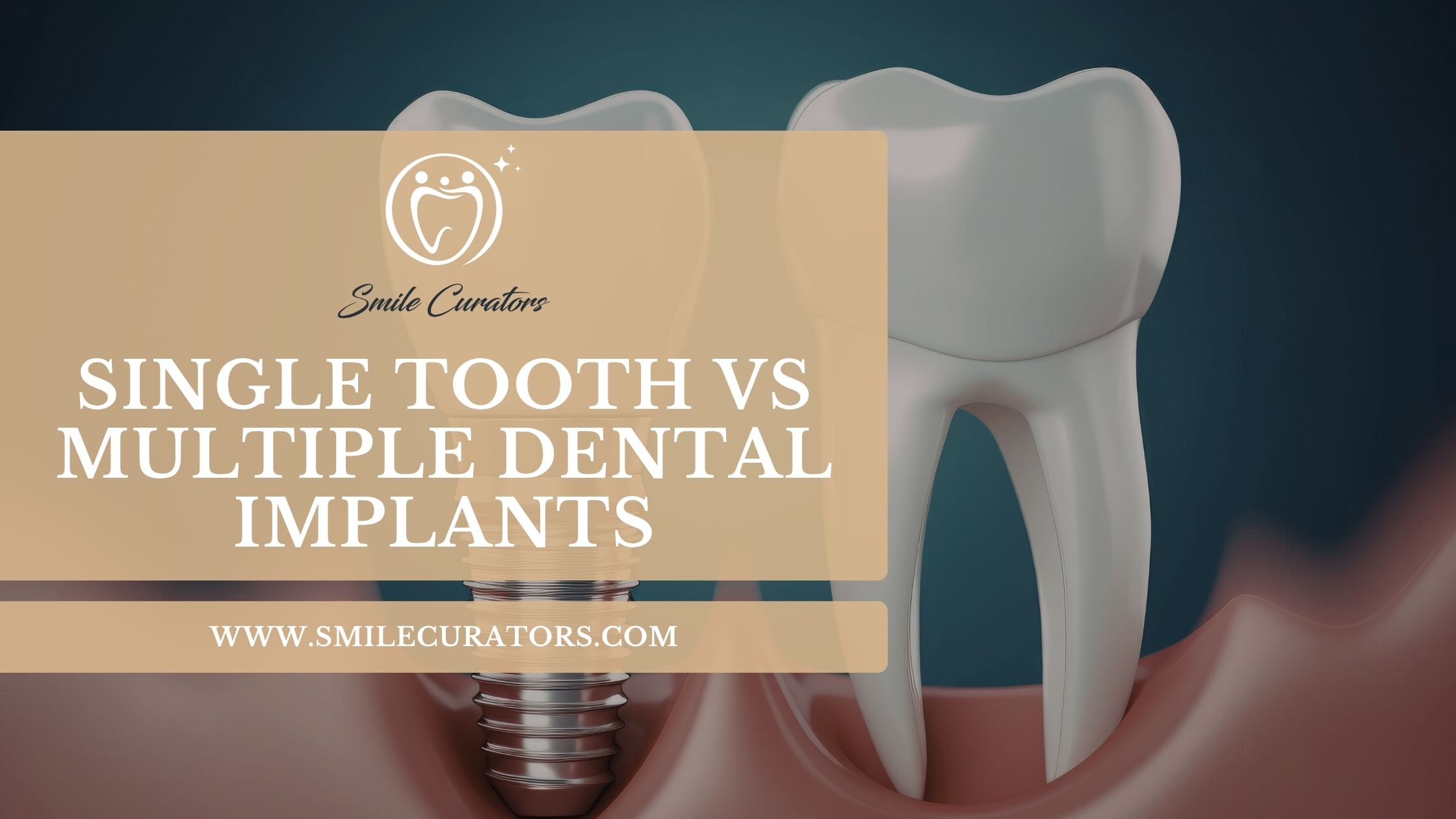
The treatment involves placing a small titanium implant into the jawbone, where it acts as an artificial tooth root. After the implant integrates with the bone through a natural healing process called osseointegration, a custom-made dental crown is attached to restore the appearance and function of the missing tooth.
Unlike a traditional dental bridge, a single implant does not require the neighboring healthy teeth to be filed down for support. This helps preserve natural tooth structure while providing a stable and long-lasting solution.
What Are Multiple Dental Implants?
Multiple dental implants are recommended when two or more teeth are missing.
Depending on the number and position of the missing teeth, your dentist may recommend different treatment approaches.
If several teeth are missing in a row, it may not be necessary to place one implant for every missing tooth. Instead, two implants can often support a three- or four-tooth implant bridge.
For patients missing all or most of their teeth, advanced options such as implant-supported full-arch restorations may be recommended. These treatments use strategically placed implants to support a complete arch of replacement teeth while minimizing the number of implants required.
Your treatment plan will always be based on your individual oral condition rather than a one-size-fits-all approach.
Single Tooth Implant vs Multiple Dental Implants
Number of Missing Teeth
A single implant is generally suitable when one tooth is missing.
Multiple implants are recommended when several teeth are missing or when an entire section of teeth needs to be replaced.
Treatment Planning
Single-tooth cases are often more straightforward because only one implant site requires evaluation.
Multiple implant cases require more comprehensive planning, including assessing the spacing between teeth, bite alignment, jawbone volume, and long-term chewing function.
Modern dental practices in Mohali often use 3D CBCT scans and digital treatment planning to accurately position implants and reduce surgical risks.
Which Option Looks More Natural?
Both options are designed to closely resemble natural teeth.
Implant-supported crowns and bridges are custom-made to match the color, size, and shape of your surrounding teeth. When planned properly, it can be difficult for others to distinguish an implant restoration from a natural tooth.
The final appearance depends on several factors, including gum health, bone support, implant positioning, and the quality of the final restoration.
Which Option Restores Better Chewing Function?
Both single and multiple dental implants are designed to restore comfortable chewing.
Because implants are anchored directly into the jawbone, they provide excellent stability compared to removable dentures.
Most patients are able to enjoy a wide variety of foods once healing is complete, including foods that may have been difficult to chew with missing teeth or loose dentures.
According to the Mayo Clinic, dental implants function similarly to natural tooth roots, allowing for improved comfort and stability during everyday activities.
Is Bone Quality Important?
Yes.
Healthy jawbone is essential for implant stability.
If a tooth has been missing for many years, the surrounding bone may have shrunk. In these situations, your dentist may recommend procedures such as bone grafting before implant placement.
The need for additional procedures depends on the amount of available bone and the location of the missing teeth.
Early replacement of missing teeth often helps preserve more natural bone.
How Long Does Treatment Take?
Dental implant treatment is completed in stages.
After placing the implant, the jawbone typically requires several months to heal and fuse with the implant before the final crown or bridge is attached.
Healing times vary depending on:
- Individual healing ability
- Bone quality
- Whether bone grafting is required
- Overall health
- Smoking habits
Your dentist will explain a personalized treatment timeline during your consultation.
Who Is a Good Candidate for Dental Implants?
Most healthy adults are potential candidates.
You may be suitable if you:
- Have one or more missing teeth
- Have healthy gums
- Have adequate jawbone or are eligible for bone grafting
- Practice good oral hygiene
- Do not have uncontrolled medical conditions that interfere with healing
A comprehensive clinical examination and digital imaging are essential before determining candidacy.
How Do Dentists Decide Between Single and Multiple Implants?
Every smile is unique.
During your consultation in Mohali, your dentist will evaluate:
- Number of missing teeth
- Location of missing teeth
- Bone quantity and density
- Gum health
- Bite alignment
- Overall oral health
- Medical history
- Long-term expectations
The goal is to recommend the most predictable and conservative treatment that restores both function and appearance.
Benefits of Dental Implants
Whether you need one implant or several, dental implants offer several long-term advantages:
- Natural appearance
- Improved chewing efficiency
- Better speech
- Stable and secure fit
- Helps preserve jawbone
- Does not rely on neighboring teeth for support
- Long-lasting with proper maintenance
- Easy to clean like natural teeth
These benefits make implants one of the most reliable tooth replacement options available today.
Caring for Dental Implants
Dental implants require regular maintenance to remain healthy.
Good habits include:
- Brushing twice daily
- Cleaning between teeth using floss or interdental brushes
- Attending regular dental check-ups
- Professional cleanings as recommended
- Avoiding tobacco whenever possible
- Wearing a night guard if you grind your teeth
Proper care significantly improves the long-term success of implant treatment.
Final Thoughts
Choosing between a single tooth implant and multiple dental implants isn’t simply about the number of missing teeth—it’s about selecting the treatment that best supports your oral health for years to come.
If you’re considering dental implants in Mohali, the first step is a comprehensive dental evaluation. Your dentist will assess your smile, explain your options, and recommend a personalized treatment plan based on your specific needs.
Replacing missing teeth at the right time can help restore confidence, improve chewing ability, and protect your long-term oral health.
Frequently Asked Questions
1. Can one dental implant replace two missing teeth?
In some cases, yes. Two implants can often support a bridge that replaces three or more missing teeth, depending on their position and your bone condition.
2. Is getting multiple dental implants more painful than a single implant?
The procedure is performed under local anesthesia, so discomfort during treatment is minimal. Recovery varies depending on the number of implants placed, but most patients experience manageable soreness for a few days.
3. How long do dental implants last?
With proper oral hygiene, routine dental visits, and good overall health, dental implants can last for many years and often decades.
4. Can older adults get dental implants?
Yes. Age alone is not a limiting factor. Overall health, gum condition, and bone quality are more important than age when determining eligibility.
5. How soon should I replace a missing tooth?
Replacing a missing tooth sooner rather than later can help reduce jawbone loss and prevent neighboring teeth from shifting. Your dentist can advise on the ideal timing based on your individual situation.