
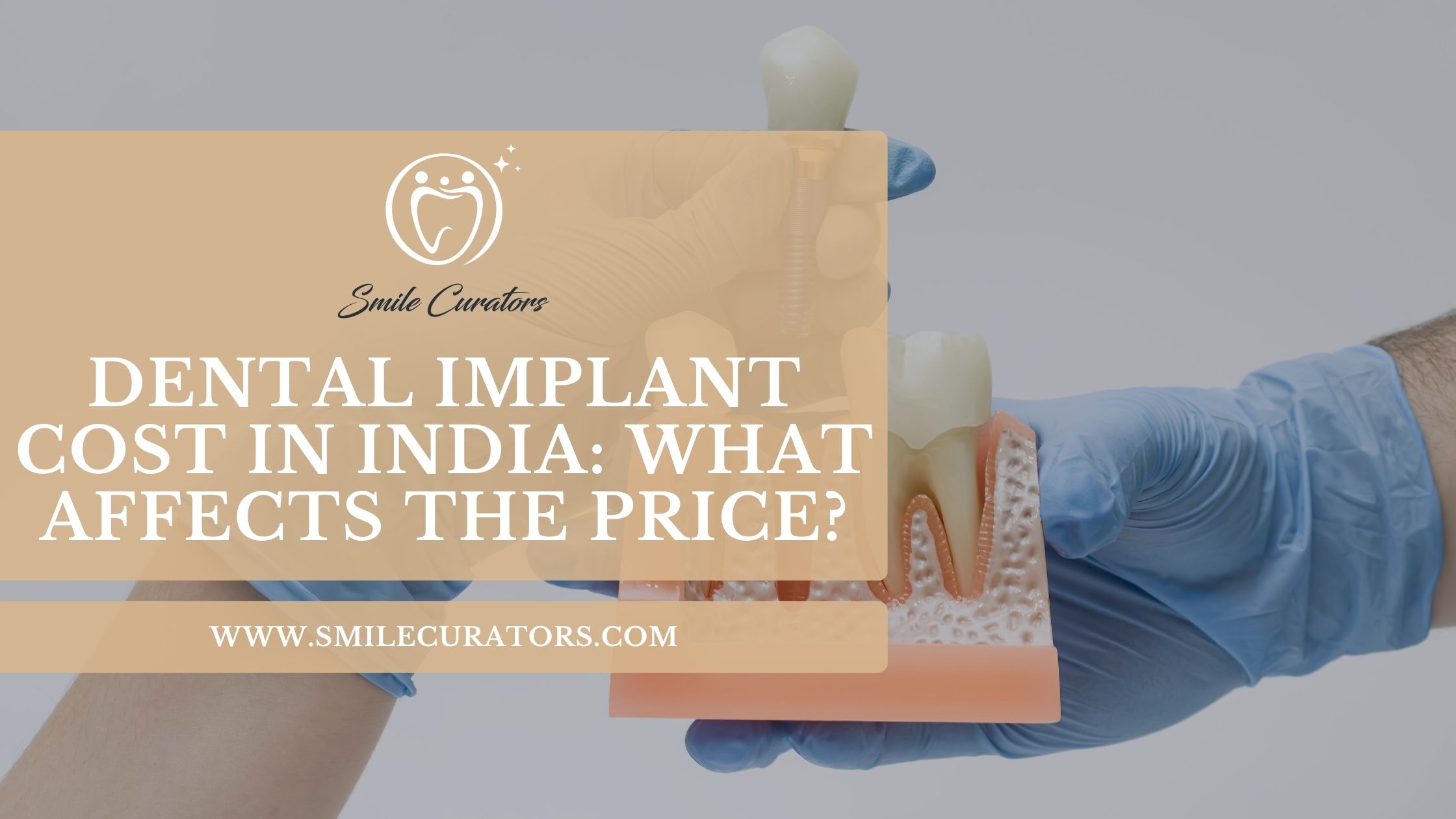
If you’ve been considering dental implants, one of the first questions that probably comes to mind is, “How much does a dental implant cost in India?” It’s a fair question—and one that doesn’t always have a simple answer.
You may have seen advertisements offering implants at surprisingly low prices, while others quote significantly higher costs. This wide price range can leave patients confused about what they’re actually paying for and whether a lower price means a compromise in quality.
The truth is that the cost of a dental implant isn’t determined by the implant alone. Several clinical and technical factors influence the overall treatment cost. Understanding these factors can help you make an informed decision based on value rather than price alone.
In this guide, we’ll explain what affects the cost of dental implants in India, why prices vary from patient to patient, and what you should consider before starting treatment.
Why Is There No Fixed Price for Dental Implants?
Unlike routine dental procedures such as fillings or teeth cleaning, dental implant treatment is highly personalized.
Every patient has different oral health conditions, including:
- The number of missing teeth
- Jawbone quality and quantity
- Gum health
- Medical history
- Type of implant restoration required
Because every case is unique, the final treatment cost is customized according to your individual needs.
1. Number of Implants Needed
One of the biggest factors affecting cost is the number of implants required.
For example:
- Replacing one missing tooth usually requires one implant and one crown.
- Several missing teeth may require multiple implants or an implant-supported bridge.
- Full-mouth rehabilitation may use strategically placed implants to support an entire arch of teeth.
More implants generally mean additional surgical procedures, components, and laboratory work.
2. Type and Brand of Dental Implant
Not all dental implants are manufactured the same way.
Dental implant systems vary based on:
- Material quality
- Surface technology
- Scientific research
- Long-term clinical evidence
- Manufacturing standards
Globally recognized implant systems often undergo extensive testing and research before being introduced into clinical practice. These systems may cost more but are supported by long-term clinical studies and quality assurance.
Your dentist can explain why a particular implant system is recommended for your situation.
3. Bone Quality and Jawbone Health
Healthy jawbone is essential for successful implant treatment.
If a tooth has been missing for a long time, the surrounding bone may shrink because it is no longer stimulated during chewing.
When there isn’t enough bone to securely support an implant, additional procedures such as bone grafting or sinus augmentation may be recommended before implant placement.
These procedures improve the long-term stability of the implant but also add to the overall treatment cost.
According to the Cleveland Clinic, bone grafting helps rebuild bone in areas where natural bone volume is insufficient for implant placement.
4. Diagnostic Tests and Digital Planning
A successful dental implant procedure begins long before surgery.
Most dentists recommend diagnostic investigations such as:
- Digital dental X-rays
- Cone Beam Computed Tomography (CBCT) scan
- Intraoral digital scans
- Clinical photographs
These tools help evaluate bone structure, identify important anatomical landmarks, and allow precise implant planning.
Although diagnostic imaging adds to the initial cost, it plays a crucial role in improving treatment accuracy and safety.
5. Experience of the Dental Professional
The expertise of the dentist performing the procedure can also influence the treatment cost.
Experienced implant dentists often invest in:
- Advanced training
- Continuing education
- Digital technology
- Surgical planning software
- Modern sterilization systems
Choosing an experienced clinician may contribute to better treatment planning and predictable outcomes, especially in more complex cases.
Rather than selecting treatment based solely on price, it’s worth considering the dentist’s qualifications, experience, and approach to patient care.
6. Type of Final Restoration
The implant itself is only one part of the treatment.
Once the implant integrates with the jawbone, it is restored with a custom-made prosthesis, which may include:
- A single dental crown
- An implant-supported bridge
- An implant-supported denture
- A full-arch prosthesis
The material used for the final restoration—such as porcelain, zirconia, or porcelain-fused-to-metal—can influence the total cost.
Your dentist will recommend the most appropriate option based on your bite, aesthetics, and functional needs.
7. Complexity of the Case
Not every implant procedure is equally straightforward.
Some cases require additional planning because of:
- Previous tooth loss
- Gum disease
- Bone defects
- Limited mouth opening
- Bite correction
- Previous dental treatments
Complex cases often involve additional appointments and procedures, which can affect the final treatment cost.
8. Geographic Location of the Dental Clinic
Dental treatment costs can vary between cities and regions.
Factors such as clinic infrastructure, laboratory costs, operating expenses, and local demand may influence pricing.
However, higher cost does not automatically guarantee better quality, and lower prices do not necessarily indicate poor treatment.
It’s important to evaluate the overall value of care rather than focusing only on the quoted fee.
9. Technology Used During Treatment
Modern implant dentistry increasingly relies on digital technology.
Some clinics use:
- Computer-guided implant surgery
- Digital smile design
- Intraoral scanners
- CAD/CAM restorations
- Surgical guides
These technologies improve planning accuracy, enhance patient comfort, and may reduce treatment time in suitable cases.
Their use may also contribute to the overall cost of treatment.
10. Follow-Up Care and Maintenance
Implant treatment doesn’t end when the crown is placed.
Long-term success depends on:
- Regular dental check-ups
- Professional cleanings
- Monitoring gum health
- Evaluating implant stability
- Maintaining good oral hygiene
Some clinics include follow-up visits in the treatment package, while others charge separately.
Understanding what is included in your treatment estimate helps avoid unexpected expenses later.
Should You Choose the Cheapest Dental Implant?
It’s understandable to compare prices, especially for a significant investment like dental implants.
However, choosing treatment based solely on the lowest price may not always be in your best interest.
Before making a decision, consider asking:
- Which implant system is being used?
- Is a CBCT scan included?
- Are the implant, abutment, and crown included in the estimate?
- Will I need additional procedures?
- What follow-up care is provided?
- What experience does the dentist have with implant treatment?
A transparent discussion with your dentist can help you understand exactly what you’re paying for.
Are Dental Implants Worth the Investment?
Many patients wonder whether implants are worth the cost compared to other tooth replacement options.
While the initial investment may be higher than bridges or removable dentures, dental implants offer several long-term advantages, including:
- Replacement of both the tooth and its root
- Preservation of jawbone health
- Improved chewing efficiency
- Natural appearance
- Stable fit without adhesives
- No need to alter neighboring healthy teeth
- Long-lasting results with proper care
According to the American Academy of Implant Dentistry (AAID), dental implants are one of the most predictable and durable methods for replacing missing teeth.
Can Dental Implants Save Money in the Long Run?
Although every situation is different, dental implants may reduce the need for repeated repairs associated with some traditional restorations.
With proper maintenance and routine dental care, implants can remain functional for many years, making them a valuable long-term solution for many patients.
It’s important to remember that good oral hygiene and regular dental check-ups play a significant role in their longevity.
Final Thoughts
Dental implant costs in India vary because every patient has different oral health needs. Factors such as the number of missing teeth, jawbone condition, implant system, diagnostic planning, restorative materials, and treatment complexity all contribute to the final cost.
Instead of looking only for the lowest price, focus on receiving a personalized treatment plan, clear communication, and evidence-based care. A comprehensive consultation allows your dentist to evaluate your oral health, explain the available options, and provide a treatment estimate tailored to your needs.
Investing in the right treatment today can help restore your smile, improve chewing function, and support your long-term oral health.
Frequently Asked Questions
1. Why do dental implant prices vary so much in India?
The cost depends on several factors, including the number of implants needed, implant brand, bone condition, diagnostic tests, restorative materials, and whether additional procedures like bone grafting are required.
2. Does a higher-priced dental implant mean better quality?
Not necessarily. While premium implant systems often have extensive clinical research behind them, the overall success of treatment also depends on proper diagnosis, treatment planning, surgical technique, and long-term maintenance.
3. Will I need additional procedures before getting an implant?
Some patients may require bone grafting, sinus lift surgery, or treatment for gum disease before implant placement. Your dentist will determine this after a clinical examination and imaging.
4. How long do dental implants last?
With good oral hygiene, routine dental check-ups, and proper maintenance, dental implants can last for many years and often decades.
5. Is a consultation necessary before knowing the cost?
Yes. Since every patient’s oral condition is different, a consultation—including a clinical examination and, when needed, imaging—is essential to provide an accurate treatment plan and cost estimate.