

What if your gums were trying to warn you about a serious dental problem—but you didn’t notice the signs? Many people assume that occasional bleeding gums or mild gum sensitivity are harmless. In reality, these subtle changes are often the body’s first warning that gum disease is developing. Did you know that nearly half of adults aged 30 years and older have some form of periodontal (gum) disease? According to the Centers for Disease Control and Prevention (CDC), about 42% of adults experience gum disease, yet many remain unaware until the condition has advanced. What often starts as mild bleeding gums or slight gum irritation can eventually lead to loose teeth, bone loss, and even tooth loss if left untreated.
The good news is that the early symptoms of gum disease are usually easy to spot and can often be reversed with timely dental treatment and diligent oral hygiene. However, since these symptoms are typically painless during the initial stages of the disease, they are often ignored until more irreversible damage is done. With this guide, we will help you pinpoint the early signs of gum disease, identify typical gum disease symptoms, explain why swollen gums and gingivitis symptoms require immediate treatment, and sample simple ways to prevent gum disease before it advances.
Fun Fact: Gum disease is not only a smile issue, but also a health-related risk factor for chronic conditions such as diabetes, heart disease, and pregnancy complications.
Why Healthy Gums Matter More Than You Think
Your gums are not simply there to secure your teeth. They create a barrier round the surfaces of your teeth that prevent bacteria from ever getting near the deeper supporting tissues and jawbone. When plaque builds up on the tooth along the gumline and is not removed by brushing, flossing or professional cleanings, the bacteria releases toxins and causes inflammation. The first of these signs is basically gingivitis, which is the mildest type of gum disease. If left untreated, it can progress into periodontitis which is a more severe state where the bone supporting your teeth becomes affected.
Early identification of these disparities will allow for minimal wear and tear on a tooth that may have lasting consequences and require complicated treatment.
Early Signs of Gum Disease You Should Never Ignore
Gum disease tends to present early signs that are easily overlooked but they should never be ignored. Treatment can begin earlier, and this leads to better long-term oral health.
1 Brushing or Flossing Bleeding Gums
One of the most well-known indications of gum disease is bleeding gums. Most people assume that it is normal for their gums to bleed from time to time, particularly after brushing. In actuality, healthy gums very rarely bleed. Bleeding is simply a result of bacteria irritating the gum tissue, inflammation and weakening of tiny blood vessels. You must even pay attention to small amount blood in the sink.
Instead of waiting for your gums to stop bleeding, if this persists ever few days go and get a check up at the dentist.
2 Swollen or Tender Gums
Swollen gums are another seasoned caution sign. Healthy gum is fitted around your teeth. When bacteria start to build up, your immune system reacts by causing inflammation which makes the gums look:
- Puffy
- Red
- Tender
- Sensitive to touch
Increased swelling might not be painful every time, but it means your gums are battling an infection. This stage can usually be reversed with professional treatment before permanent damage has occurred.
3 Persistent Bad Breath
Bad breath that persists after brushing your tooth or using mouthwash can be one very unnoticed signs and symptoms of gum disease. These bacteria thrive below the gumline and excrete sulphur compounds that cause foul smell. On the other common bad breath of gum disease, would not only disappear after brushing but goes on all day long.
4. Red or Receding Gums
Healthy gums are generally pale pink. Inflamed gums often become:
- Bright red
- Dark red
- Purple in severe cases
Some people also notice that their gums appear to be pulling away from the teeth, making teeth look longer than before. Although gum recession can have several causes, it frequently accompanies early periodontal disease and should be evaluated by a dentist.
Common Gingivitis Symptoms to Watch For
Common Gingivitis Symptoms You Should Never Ignore
Many people fail to recognise gingivitis symptoms because the condition usually causes little or no pain in its early stages. However, these symptoms are often among the early signs of gum disease, making timely identification essential for preventing more serious oral health problems.
The most common symptoms include:
✔ Bleeding while brushing or flossing
✔ Red or inflamed gums
✔ Mild gum tenderness
✔ Persistent bad breath
✔ Slight gum recession
✔ Increased plaque buildup
The good news is that gingivitis is reversible when treated early. If you notice these early signs of gum disease, scheduling a professional dental cleaning and improving your daily oral hygiene routine can help restore healthy gums and prevent the condition from progressing into advanced periodontal disease.
From Healthy Gums to Gum Disease
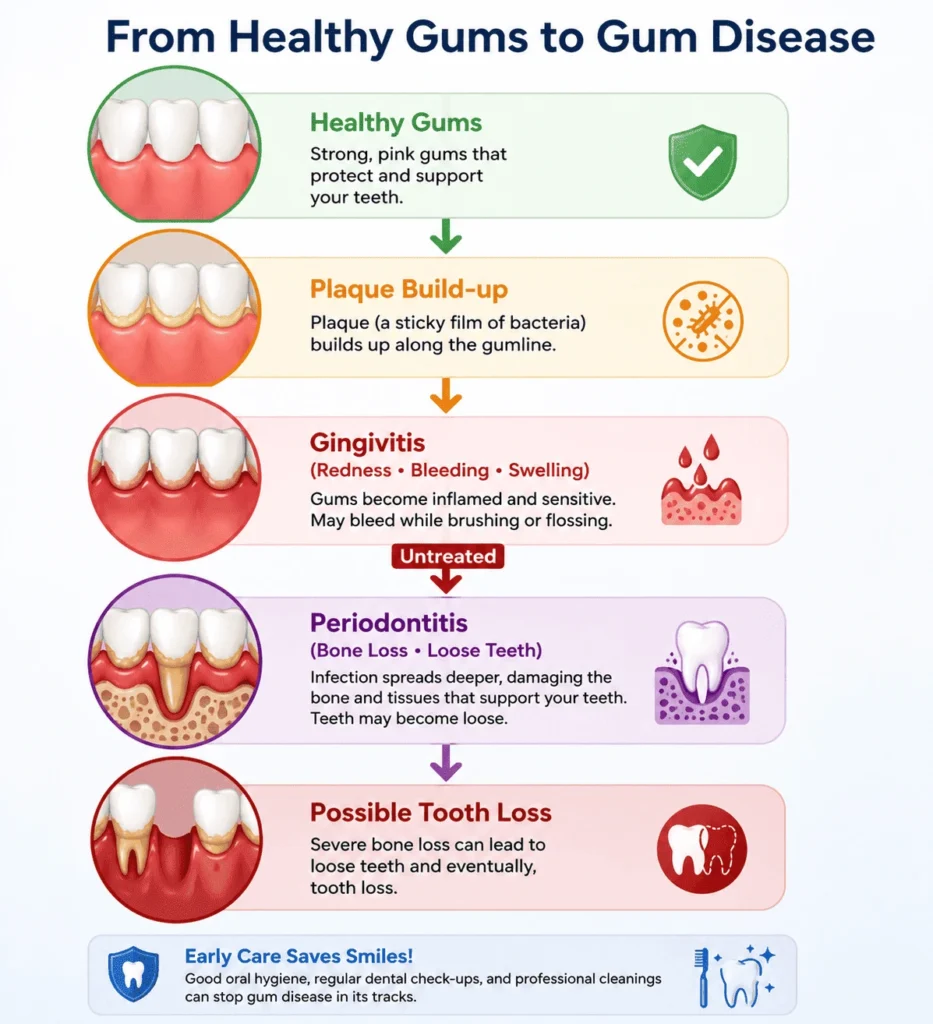
Early intervention at the gingivitis stage can stop this progression and preserve your natural teeth.
Who Is Most at Risk?
While anybody can develop gum disease, those things that put you at higher risk for lit up indications of gum illness.
People at higher risk include:
- Smokers and tobacco users
- Individuals with diabetes
- Pregnant women owing to hormonal imbalance
- Adults over 35 years
Statistics You Should Know
Around 42% of those aged at least 30 years have periodontitis. (CDC)
Periodontal disease is among the most prevalent oral health diseases with an estimated global prevalence of approximately 19 percent of adults suffering from severe periodontal disease.
Healthy Gums Daily Oral Care Routine
Following a consistent routine is one of the found ways on how to avoid gum disease and have a healthy smile.
Morning
✔ Brush for two minutes
✔ Clean your tongue
✔ Rinse with alcohol free mouthwash
After Meals
✔ Drink water to clean food residues
✔ If you consume sugars or acids, make sure to wash your mouth intelligently.
Night
✔ Brush thoroughly before bed
✔ Floss gently between all teeth
✔ Avoid eating after brushing
Following this routine will reduce plaque formation and allow your gums to be healthy for a longer period of time. Want to know what to expect during braces treatment? Check our real patient stories & real experiences, treatment progress, and inspiring outcomes to help you feel informed and confident about your orthodontic journey
Conclusion
Ignoring the warning signs: The first stages of gum disease can be quite minor, but do not ignore them as this often leads to more severe dental problems in the future. Gingivitis symptoms like bleeding gums, swollen gums, bad breath that just won’t go away and more are your body’s way of saying something is wrong. The promise is that gum disease in the early-stages is potentially preventable and reversible with dental treatment and careful oral hygiene. However, if you know the warning signs, visit your dentist regularly and follow tried-and-true gum disease management (or prevention) strategies, you can save that beautiful smile, and many years of healthy gums. We, at Smile Curators, believe in prevention as the pathway to timeless oral health. Whether you have detected warning signs or have not had a dental screening for quite some time, our seasoned members can assist you in bringing back and sustaining a bright smile.
Frequently Asked Questions
Q- What Is The First Common Symptom Of Gum Infection?
The first sign is usually gum bleeding, particularly when tooth brushing or flossing. Other initial symptoms may be redness, slight swelling and constant bad breath. Neglecting these symptoms may allow the condition to progress and whatever you do, it should not be treated lightly.
Q- Is it possible to reverse early-stage gum disease?
Yes. The early stage of gum disease is known as gingivitis and can usually be reversed with a dental cleaning, better brushing and flossing habits, and regular visits at the dentist. As with many types of illness, early diagnosis leads to better outcomes.
Q- How long can it take for gum disease to form?
Plaque build up might result in gum disease within weeks if good oral hygiene was unpracticed. Progression however is variable and it depends on brushing behaviour, smoking history, diabetes, genetics and overall health.
Q- If I brush every day, am I bound to white teeth?
Brushing alone may not clear plaque from between your teeth and below the gumline. Gums can bleed due to incorrect brushing, poor flossing, or even due to a moderate as well as existing gingivitis. There could be an underlying cause, which can be diagnosed through a dental examination.
Q- How often should I be professionally checked for my gums?
Dental examination and professional cleanings are recommended by most dentists every 6 months. People battling with diabetes, are smokers and who have had prior history of gum disease may call for additional periodontal assessments.